-
Email:zhao@hyliec.cn
-
Tel:+86 311 85273988
-
WhatsAPP:8613931128750
Durable and Cheap Garden Fence Panels for Secure Perimeters
Securing a perimeter requires a delicate balance between cost-efficiency and structural integrity. For property owners looking for a reliable way to define boundaries or protect private assets, the selection of fencing materials can be daunting. High-security wire systems provide a professional-grade solution that transcends simple boundary marking, offering robust anti-climb features and long-term durability through advanced coatings. Whether the objective is to protect a residential garden, a commercial site, or a rural farm, the utility of pre-galvanized iron wire combined with polyester coating ensures the structure withstands environmental stress while maintaining a clean aesthetic.
This guide examines the technical specifications and application logic of security fencing, focusing on how specific wire diameters and mesh openings impact the overall effectiveness of the installation. By understanding the relationship between material composition and situational requirements, buyers can procure fencing systems that offer genuine peace of mind without unnecessary over-expenditure.

Understanding the Engineering of High-Security Wire Panel Systems
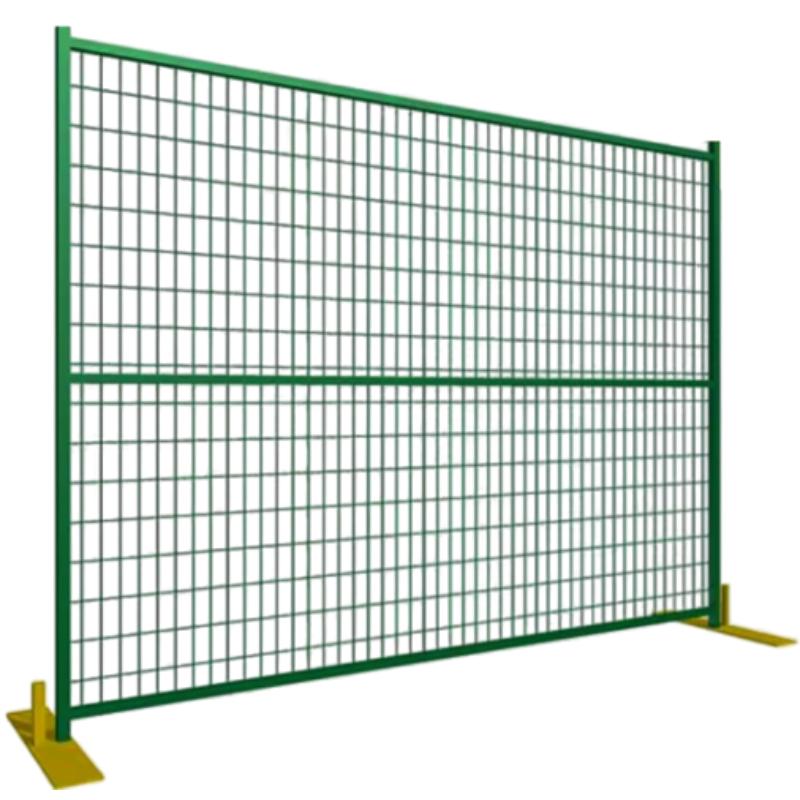
The effectiveness of a security fence is rooted in its material science and structural geometry. At the core of these systems is pre-galvanized iron wire, which provides the primary defense against oxidation and corrosion. To further enhance longevity, a polyester coating is applied, typically in industry-standard colors such as RAL6005 (Moss Green), RAL7016 (Anthracite Grey), or RAL9005 (Jet Black). This dual-layer protection is critical for installations in diverse climates, preventing rust from compromising the structural tension of the panels.
From a design perspective, the "anti-climb" functionality is achieved through specific opening sizes (e.g., 76.2x12.7 mm). These dimensions are strategically chosen to prevent intruders from gaining a foothold or finger-hold, effectively neutralizing common breaching attempts. The choice between plain panels and folding panels allows for flexibility based on the terrain and the specific security level required for the site.
- Material Core: Pre-galvanized iron for high tensile strength.
- Protective Finish: UV-resistant polyester coating for weatherproofing.
- Geometry: Narrow mesh apertures to discourage scaling.
- Support Options: Selection of square tube posts or I-type tube posts for stability.

Strategic Application Scenarios for Perimeter Protection
Security fencing is not a one-size-fits-all product; its deployment varies based on the risk profile of the environment. In residential settings, homeowners often seek a way to secure their property from unauthorized access while maintaining a professional look. The integration of these panels allows for a secure boundary that can be further augmented with surveillance systems or access control mechanisms.
In commercial and industrial sectors, the requirements shift toward high-traffic durability and maximum deterrence. Here, the height of the fence becomes a critical variable, with options ranging from 1500mm for basic demarcation to 3000mm for critical asset protection. Because the system is adaptable, it can be seamlessly integrated into existing security infrastructure, providing a cohesive layer of situational awareness and physical containment.
Rural applications, such as farms or livestock reserves, benefit from the sturdy structure of the wire panels, which block breaches more effectively than traditional chain-link or wooden options. The ability to customize width and height ensures that the fence fits the specific topography of the land without compromising on security.
Buyer's Guide: Evaluating Specifications for Maximum Value
When sourcing cheap garden fence panels, the primary risk is sacrificing longevity for initial cost. A professional buyer should focus on the Wire Diameter (mm) and the Coating Quality. A wire diameter of 3mm to 4mm is typical for security applications; anything less may compromise the anti-climb effectiveness and the overall rigidity of the panel.
Another critical consideration is the post type. Square tube posts offer a modern look and high stability, while I-type tube posts are often preferred for specific industrial mounting requirements. Buyers must also verify the certifications of the manufacturer—such as ISO 9001 for quality management and BSCI for social compliance—to ensure that the products are manufactured under consistent standards.
To optimize the procurement process, consider the following checklist:
- Environmental Exposure: Will the fence be near salt water or high humidity? (Prioritize coating thickness).
- Intrusion Risk: Is the area prone to scaling? (Choose the 76.2x12.7 mm narrow opening).
- Aesthetic Requirements: Does the color need to blend with the landscape? (Specify RAL codes).
- Installation Scale: Are there curves or uneven ground? (Evaluate folding panel options).
Security Fencing Technical Specification Matrix
| Wire Diameter (mm) | Opening Size (mm) | Panel Height (mm) | Panel Width (mm) |
|---|---|---|---|
| 3.0 - 4.0 | 76.2 x 12.7 | 1500 | 2200 - 2500 |
| 3.0 - 4.0 | 76.2 x 12.7 | 1800 | 2200 - 2500 |
| 3.0 - 4.0 | 76.2 x 12.7 | 2100 | 2200 - 2500 |
| 3.0 - 4.0 | 76.2 x 12.7 | 2400 | 2200 - 2500 |
| 3.0 - 4.0 | 76.2 x 12.7 | 3000 | 2200 - 2500 |
Manufacturing Excellence and Quality Assurance Standards
The reliability of a fencing system is determined during the production phase. A high-standard manufacturing process involves precise welding of the wire intersections and a uniform application of the polyester coating. Hebei Yelang Imp. & Exp. Trade Co., Ltd utilizes decades of experience to ensure that each panel meets rigorous tolerances, reducing the risk of onsite installation errors.
Quality control is not limited to the final product but extends to raw material sourcing. By utilizing pre-galvanized iron, the manufacturer ensures a foundational layer of protection before the color coating is applied. This approach is backed by certifications including ISO 14001 for environmental management and ISO 45001 for occupational health and safety, reflecting a commitment to sustainable and professional industrial practices.
For international buyers in North America, Europe, and Africa, the consistency of the product is paramount. Large-scale export experience ensures that the packaging and logistics are optimized to prevent panel deformation during transit, ensuring that the products arrive ready for precise installation.
Future Trends in Perimeter Security and Sustainable Fencing
The industry is moving toward "intelligent perimeters," where physical barriers are combined with digital sensing. We are seeing an increase in the integration of vibration sensors and intrusion detection technology directly into the wire mesh. This transformation allows property owners to transition from passive deterrence to active monitoring, receiving real-time alerts when a fence is touched or breached.
Sustainability is also becoming a primary driver in material selection. The move toward low-VOC polyester coatings and recyclable galvanized steel reduces the environmental footprint of large-scale installations. As urban areas grow, the demand for fences that provide security without creating a "prison-like" atmosphere is rising, leading to more diverse color palettes and more elegant panel designs that blend security with landscape architecture.
Ultimately, the goal is to provide a solution that is both economically viable and technically superior. By focusing on modular designs and high-durability coatings, the industry is reducing the lifecycle cost of fencing, moving away from frequent replacements toward permanent, low-maintenance infrastructure.
Common Inquiries Regarding Security Fencing Systems
What is the primary advantage of polyester coating over standard galvanization?
While galvanization provides excellent rust protection, polyester coating adds a second layer of defense and allows for aesthetic customization (RAL colors). It protects the zinc layer from wear and UV degradation, significantly extending the fence's lifespan in harsh outdoor environments.
How does the anti-climb feature actually work in these panels?
The anti-climb effect is achieved through a very narrow mesh aperture (such as 76.2x12.7 mm). This spacing is too small for a human hand to grip firmly and too narrow for a foot to gain purchase, making it extremely difficult to scale the fence without specialized equipment.
Can these security fences be integrated with electronic alarm systems?
Yes, the sturdy wire structure is ideal for the integration of intrusion detection cables or sensors. These can be attached to the mesh to detect vibrations or cutting, which then triggers a signal to a central security monitoring system.
Which post type should I choose: square tube or I-type?
Square tube posts are generally preferred for commercial and residential applications due to their clean lines and high structural stability. I-type posts are often used in specific industrial contexts where different mounting hardware or bracket systems are required.
What should I check to ensure the supplier is reliable for a large order?
You should verify the manufacturer's certifications (ISO 9001, BSCI, ISO 14001) and their track record of exports to your specific region. A supplier with over 20 years of experience in global markets is typically better equipped to handle logistical challenges and quality consistency.
Are there different panel types available for uneven terrain?
Yes, while plain panels are standard for flat ground, folding panel fences are available to better accommodate specific site requirements or different installation layouts, providing more flexibility during the setup process.
Technical References and Industry Standards
- ISO 9001: Quality Management Systems Standards
- ASTM International Material Specifications for Steel Wire
- amfori BSCI Social Compliance Initiative
- RAL Color Standard Chart for Industrial Coatings
Selecting the right perimeter solution requires a commitment to quality materials and precise specifications. By prioritizing anti-climb geometry and durable coatings, you ensure a long-term investment in the safety and security of your property.
Explore Related Fencing Solutions