-
Email:zhao@hyliec.cn
-
Tel:+86 311 85273988
-
WhatsAPP:8613931128750
High Security Anti Climb Fence Panels Supplier and Solutions
Securing a perimeter requires more than just a physical barrier; it demands a strategic integration of material strength and design functionality. Whether protecting a high-value commercial site, a military installation, or a private residence, the effectiveness of a security system depends heavily on the quality of the fencing components used. For many project managers and property owners, finding a reliable fence panels supplier is the first step in mitigating risk and preventing unauthorized access.
Our high-security fencing solutions are engineered to provide a robust defense against intruders, combining anti-climb features with durable coatings. By utilizing pre-galvanized iron wire and high-grade polyester coatings, these systems ensure long-term structural integrity in diverse environmental conditions. From plain panel configurations to complex folding designs, the adaptability of these systems allows for seamless integration with modern surveillance and access control technologies, ensuring a comprehensive approach to site safety and confidentiality.

Engineering the Defense: Technical Characteristics of High-Security Fencing
The core of an effective security perimeter lies in its resistance to breach. Our security fencing is designed with a specific focus on anti-climb functionality. Unlike standard wire mesh, the aperture size and wire diameter are optimized to prevent footholds and handholds, significantly increasing the difficulty for unauthorized individuals to scale the barrier. This makes it an indispensable asset for critical infrastructure and private estates where perimeter security is non-negotiable.
Material selection plays a pivotal role in the longevity of the installation. We utilize pre-galvanized iron wire combined with a polyester coating. This dual-layer protection prevents oxidation and corrosion, which is critical for outdoor installations exposed to moisture and pollutants. Available in professional colors such as RAL6005, RAL7016, and RAL9005, the fencing not only provides security but also blends aesthetically with the surrounding commercial or residential environment.
Furthermore, the versatility of the support system enhances the overall stability. Depending on the project requirements, users can choose between square tube posts or I-type tube posts. These options ensure that the panels remain rigid and plumb, even under external pressure or in areas with challenging soil conditions, maintaining the security line's integrity over time.

Versatile Applications Across Private and Industrial Sectors
Security fencing is not limited to military or industrial zones; its utility extends to a wide array of applications. In residential settings, homeowners utilize these systems to create a secure sanctuary, providing peace of mind by establishing a clear, impenetrable boundary. For farms and rural properties, the robust structure prevents livestock escape and deters trespassers, while commercial sites use them to protect valuable equipment and inventory from theft.
One of the most significant advantages of these systems is their ability to evolve with the security needs of the site. The panels can be customized to integrate with:
- Surveillance Systems: Mounting brackets for CCTV cameras.
- Access Control: Seamless integration with electronic gates and card readers.
- Intrusion Detection: Installation of vibration sensors or fiber-optic detection cables.
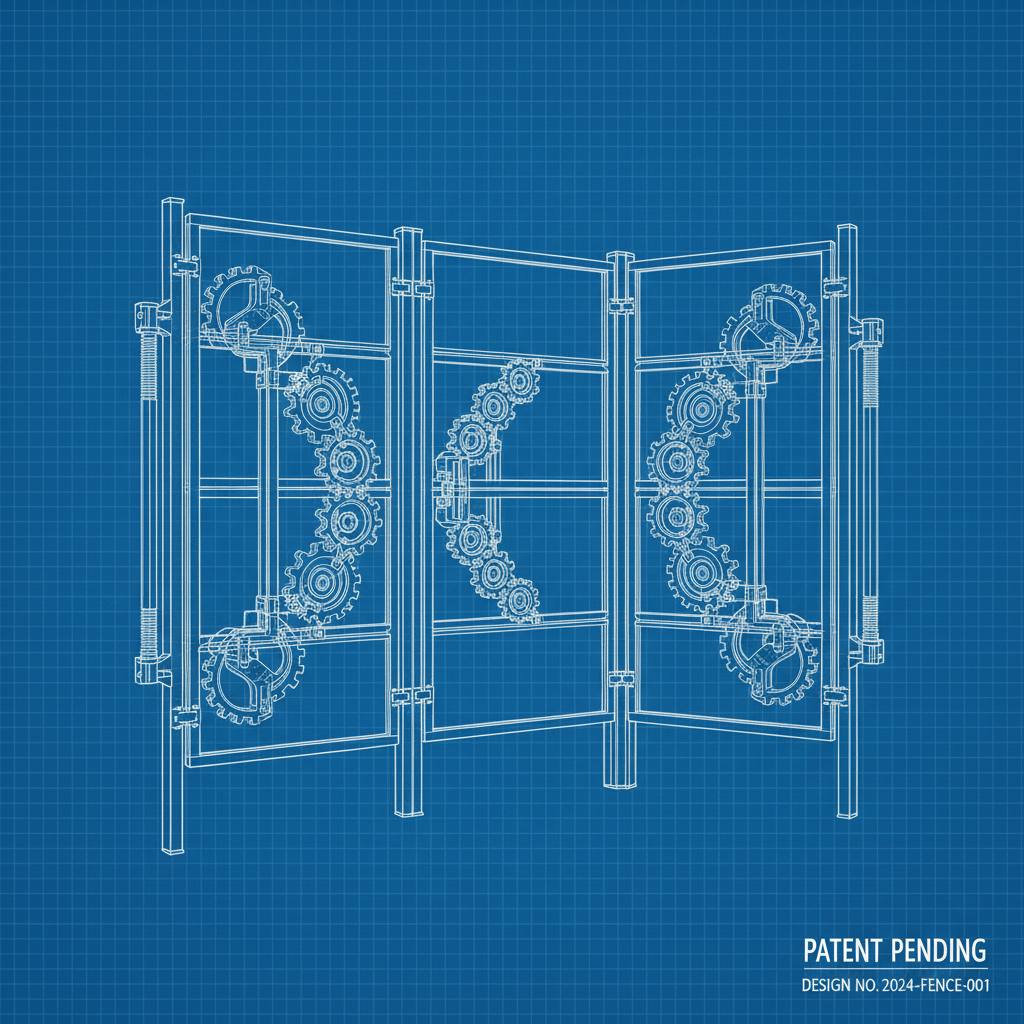
Whether it is a plain panel layout for a standard boundary or a folding panel design for specific spatial requirements, the flexibility of the system ensures that the reserve remains secure and inaccessible to unauthorized persons. This adaptability allows the fencing to function as a primary layer of a multi-tiered security strategy.
Strategic Procurement: Evaluating Your Perimeter Needs
When selecting a fence panels supplier, procurement managers must look beyond the price per meter and evaluate the total cost of ownership and the technical suitability of the product. A common mistake is choosing a generic mesh that lacks specific anti-climb geometry, which renders the fence a mere visual marker rather than a security barrier.
Key evaluation criteria should include the coating quality and the gauge of the wire. A thinner wire may reduce initial costs but will fail prematurely under tension or environmental stress. The use of polyester coating over galvanization is a standard for high-performance environments, ensuring that the fence does not rust at the weld points—a frequent failure point in lower-quality products.
Additionally, the choice of posts (Square vs. I-type) should be based on the expected load and the installation method. For high-traffic industrial areas, square tube posts often provide superior lateral stability. For rapid deployment or specific architectural requirements, I-type posts may be more appropriate. Ensuring these specifications align with the site's geological and security requirements is essential for a successful deployment.
Technical Specifications for Security Fence Panels
| Wire Diameter (mm) | Opening Size (mm) | Panel Height (mm) | Panel Width (mm) |
|---|---|---|---|
| 3.0 - 4.0 | 76.2 x 12.7 | 1500 | 2200 - 2500 |
| 3.0 - 4.0 | 76.2 x 12.7 | 1800 | 2200 - 2500 |
| 3.0 - 4.0 | 76.2 x 12.7 | 2100 | 2200 - 2500 |
| 3.0 - 4.0 | 76.2 x 12.7 | 2400 | 2200 - 2500 |
| 3.0 - 4.0 | 76.2 x 12.7 | 3000 | 2200 - 2500 |
Quality Assurance in Metal Wire Fabrication
The reliability of a security barrier is only as strong as its weakest weld. Professional manufacturing involves rigorous quality control at every stage of the process, from the initial drawing of the pre-galvanized wire to the final curing of the polyester coating. Adherence to international standards such as ISO 9001 and ISO 14001 ensures that the production process is consistent and environmentally responsible.
A critical aspect of quality is the precision of the opening sizes. In anti-climb fencing, a deviation of even a few millimeters in the mesh opening can create a potential grip point for an intruder. Utilizing automated welding and cutting machinery allows for the tight tolerances required for high-security applications. This precision ensures that every panel delivered to the site is identical, simplifying installation and ensuring no weak points are introduced during assembly.
Furthermore, certifications like BSCI reflect a commitment to ethical manufacturing, which is increasingly important for corporate procurement and government contracts. By prioritizing both technical precision and operational integrity, manufacturers can provide products that meet the evolving demands of the global security market.
Future Trends in Perimeter Security Integration
As security threats evolve, the role of physical fencing is shifting from a passive barrier to an active part of a smart security ecosystem. We are seeing a trend toward "intelligent perimeters," where physical panels serve as the mounting infrastructure for AI-driven sensors and thermal imaging. This allows security personnel to receive real-time alerts the moment a fence is touched or breached, reducing response times significantly.
Material science is also advancing, with new coating technologies offering even higher resistance to salt spray and UV degradation. This is particularly important for coastal installations where traditional galvanization may not be sufficient. The move toward more sustainable, recyclable metals without sacrificing strength is another key driver in the industry.
For the modern buyer, the focus is shifting toward modularity. The ability to quickly replace a single damaged panel or upgrade a section of the fence to a higher security grade without replacing the entire system is becoming a primary requirement. This modular approach reduces long-term maintenance costs and allows properties to scale their security as their risk profile changes.
Frequently Asked Questions About Security Fencing
What makes this fencing "anti-climb" compared to standard mesh?
The anti-climb feature is achieved through a specific aperture size (e.g., 76.2x12.7mm) that is too small for fingers or toes to grip effectively. This geometry prevents intruders from gaining the necessary leverage to climb the fence, making it significantly more secure than standard chain link or wide-mesh panels.
Can these panels be integrated with electronic security systems?
Yes, the sturdy structure of these panels is ideal for integrating surveillance cameras, intrusion detection sensors, and access control mechanisms. The versatility of the posts and panels allows for the seamless attachment of security hardware to enhance overall situational awareness.
Which post type should I choose: square tube or I-type?
Square tube posts generally offer higher structural rigidity and are recommended for industrial sites or high-wind areas. I-type tube posts are often preferred for their specific fitting capabilities and can be more cost-effective for certain residential or light commercial applications. The choice depends on your specific stability requirements.
How does the polyester coating protect the fence in harsh weather?
The polyester coating acts as a secondary barrier over the pre-galvanized iron wire. While the galvanization prevents deep corrosion, the polyester layer protects against UV rays, scratches, and chemical pollutants, ensuring the fence maintains its color and structural integrity over many years.
Are there different panel designs available for different site layouts?
Yes, we provide both plain panel fences for standard straight runs and folding panel fences for specialized requirements. This allows for a customized fit regardless of the terrain or the specific architectural constraints of the property.
What are the typical heights available for high-security installations?
Our security panels are available in a range of heights to meet various security levels, including 1500mm, 1800mm, 2100mm, 2400mm, 2800mm, and 3000mm. The choice of height typically depends on the risk assessment of the site and local zoning regulations.
Technical References and Industry Resources
- ISO 9001: Quality Management Systems Standards
- Principles of Perimeter Security and Fencing
- ASTM International Standards for Metal Coatings
- BSCI Code of Conduct for Ethical Manufacturing
Investing in a high-security perimeter is a critical decision for any property owner. By combining technical precision with durable materials and professional manufacturing, you can ensure that your assets remain protected against unauthorized access for years to come. For tailored specifications and professional guidance on your next project, consult with an experienced industry partner.
Related Articles