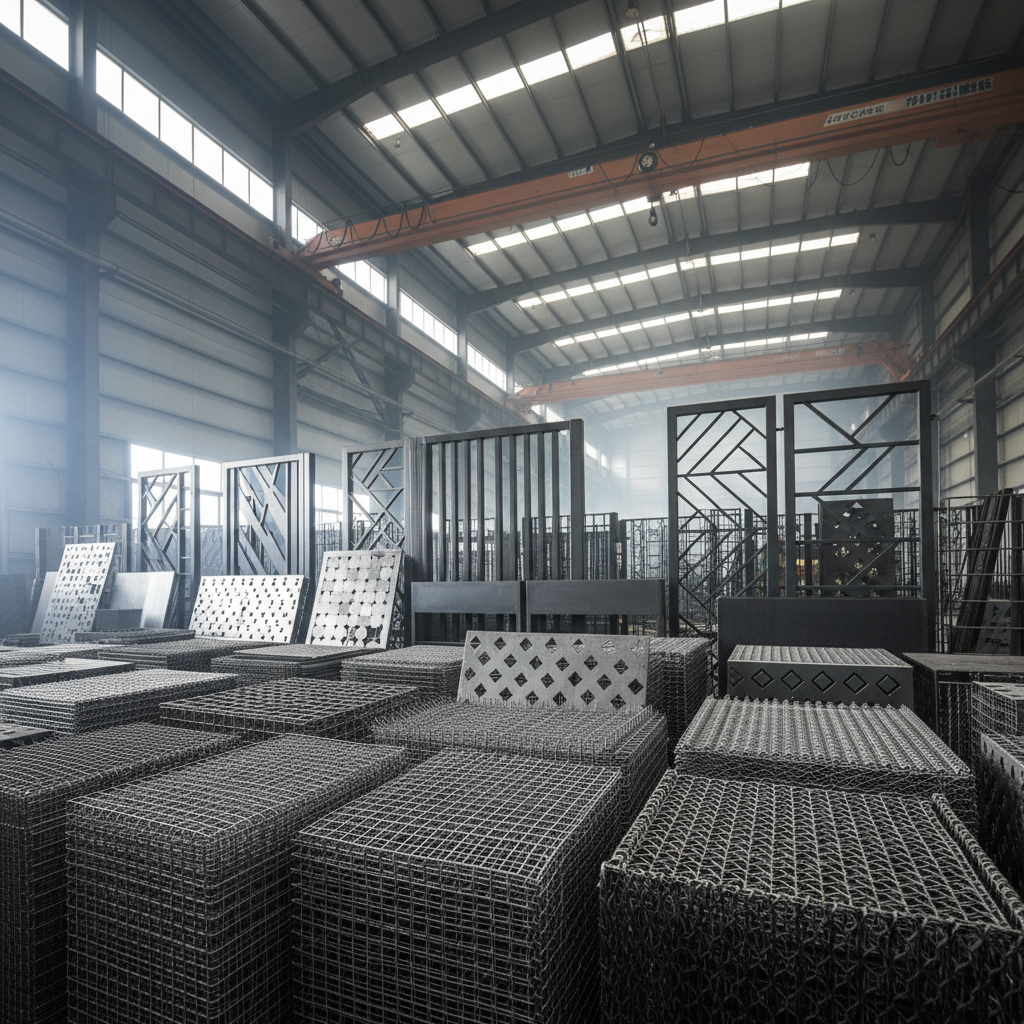

Securing a commercial or residential perimeter requires a strategic balance between cost, durability, and visual appeal. For many project managers and property owners, finding reliable fencing panel manufacturers is the first step in ensuring a long-term security investment. This guide examines the technical specifications and procurement criteria necessary to select a high-performance panel system that meets modern safety standards.
The industrial landscape for perimeter barriers has evolved from simple chain-link designs to sophisticated 3D modular systems. These modern solutions prioritize structural rigidity and corrosion resistance, making them essential for critical infrastructure, public parks, and industrial sites. Understanding the relationship between wire gauge, coating thickness, and environmental exposure is key to preventing premature failure and reducing total cost of ownership.
Readers will discover how to evaluate technical data sheets, compare material finishes like PVC coating versus galvanization, and identify the manufacturing certifications that guarantee consistency. By the end of this analysis, you will have a professional framework for assessing supplier capabilities and selecting a configuration that optimizes both security and budget.
Evaluating Perimeter Security Systems
Perimeter security is not a one-size-fits-all application; it is an engineering decision based on risk assessment. A professional barrier system must serve multiple functions: deterring unauthorized access, defining legal boundaries, and withstanding environmental stressors. In the B2B sector, the primary focus shifts toward scalability and modularity. Modular fencing panel manufacturers produce standardized units that allow for rapid deployment across large areas while maintaining a uniform security level. The technical foundation of these systems lies in the weld strength and the quality of the steel substrate. When evaluating these systems, one must look beyond the surface color and examine the zinc coating mass, which determines the fence's ability to resist oxidation in humid or coastal climates. Furthermore, the integration of specific post-fitting systems ensures that the panels remain stable under wind load or attempted intrusion, making the structural integrity of the connection points as critical as the panels themselves.
Selecting the Right Panel Fencing Solutions
Choosing a panel system involves analyzing the intersection of material science, site-specific requirements, and long-term maintenance goals. The following analysis breaks down the critical dimensions of selection to guide procurement professionals through the technical complexities of high-quality wire mesh barriers.
Material Composition and Coating
The longevity of a fence is dictated by its surface treatment. Pre-galvanized steel combined with a PVC coating offers a dual layer of protection. The galvanized layer prevents rust from the inside out, while the PVC layer protects against UV degradation and mechanical scratches. Common industry standards include RAL 6005 (Green), RAL 7016 (Anthracite Grey), and RAL 9005 (Black) for aesthetic integration.
| Coating Type | Primary Benefit | Environmental Suitability | Buyer Check |
|---|---|---|---|
| Pre-galvanized | Basic Rust Prevention | Dry/Moderate Climates | Zinc Coating Weight |
| PVC Coated | High Corrosion Resistance | Humid/Coastal Areas | Coating Thickness (μm) |
| Hot-dip Galvanized | Maximum Durability | Industrial/Aggressive | Immersion Time |
| Powder Coated | Superior Aesthetics | Urban/Commercial | Adhesion Test |
| Hybrid Coating | Balanced Protection | Diverse Environments | Layer Compatibility |
| Electro-galvanized | Smooth Finish | Indoor/Low Exposure | Coating Uniformity |
Structural 3D Design Benefits
The "3D" aspect refers to the V-shaped bends integrated into the panel. These folds are not merely decorative; they significantly increase the rigidity of the wire mesh, preventing the panel from bowing under pressure. This structural reinforcement allows the use of thinner wire gauges without sacrificing the overall strength of the barrier, leading to a more cost-effective solution for large-scale industrial perimeters.
Dimensional Specifications
Standardization is critical for replacement and expansion. Typical wire diameters range from 4.0mm to 5.0mm, with mesh apertures often set at 200x50mm or 200x55mm. Heights vary from 630mm for low boundaries to 2230mm for high-security zones. Hebei Yelang provides a comprehensive range of these specifications, ensuring that the folding number (from 2 to 4) aligns with the total height to maintain structural balance.
Application Scenarios
Depending on the security level, 3D panels are deployed differently. In residential areas, they provide clear boundaries with minimal visual obstruction. In commercial venues and public parks, they offer a modern aesthetic while managing pedestrian flow. For industrial facilities, higher wire diameters (5.0mm) and increased heights are recommended to create a secure envelope that limits unauthorized entry.
Installation Efficiency
The modular nature of panel systems drastically reduces labor costs. Lightweight construction and pre-drilled post holes allow for rapid assembly. The use of ground spikes or concrete footings depends on the soil type and the required stability. Efficient installation requires a precise match between the panel length (typically 2000-2500mm) and the post spacing to avoid tension gaps.
Maintenance and Longevity
Low maintenance is a primary driver for selecting 3D mesh. Unlike wooden fences that rot or chain-link that may sag, welded mesh maintains its geometry over time. Regular inspections should focus on the integrity of the PVC coating; any deep scratches that expose the steel should be touched up to prevent localized corrosion from spreading.
Supplier Quality Standards
When vetting suppliers, certifications like ISO 9001, BSCI, ISO 14001, and ISO 45001 provide a baseline for quality management and ethical production. Experience in exporting to diverse markets, such as North America and Europe, indicates that the manufacturer understands international shipping standards and varies its production to meet different regional building codes.
FAQ
What is the difference between 2D and 3D panel fencing?
2D panels are flat wire mesh, whereas 3D panels feature V-shaped bends (folds). These bends increase the mechanical strength and rigidity of the panel, preventing deformation under pressure while providing a more modern visual appearance. 3D systems are generally preferred for industrial and commercial applications where structural stability is a priority.
How does PVC coating improve the lifespan of a metal fence?
PVC coating acts as a non-permeable barrier that prevents oxygen and moisture from reaching the steel substrate. This significantly reduces the risk of oxidation and rust. When combined with a pre-galvanized base, the fence gains a double layer of protection, making it ideal for harsh outdoor environments or areas with high pollution.
Which wire diameter is best for high-security industrial sites?
For high-security areas, a wire diameter of 5.0mm is recommended. This thicker gauge increases the difficulty of cutting the mesh and improves the overall impact resistance of the fence. Pairing a 5.0mm wire with a height of 2000mm or more creates a formidable physical barrier for industrial perimeters.
Can 3D panel fences be customized for specific terrain?
Yes, 3D panels can be installed on uneven terrain using a "stepping" method, where each panel is slightly offset vertically. Additionally, customization of lengths (between 2000-2500mm) and heights helps in fitting the system to the specific geography of the site without compromising the security envelope.
What should I check when evaluating a fencing supplier's certifications?
Buyers should look for ISO 9001 for quality management, ensuring consistent product dimensions. ISO 14001 and ISO 45001 indicate environmental and occupational health standards. BSCI certification is crucial for companies prioritizing social responsibility and ethical labor practices in their supply chain.
How do I choose between different RAL colors for my fence?
The choice typically depends on the surrounding environment. RAL 6005 (Green) is standard for parks and rural boundaries to blend with nature. RAL 7016 (Anthracite Grey) and RAL 9005 (Black) are preferred for modern commercial buildings and urban industrial sites to provide a professional, understated look.
References and further reading
- ASTM International - Standards for Steel Fencing and Coatings.
- ISO 9001:2015 Quality Management Systems Requirements.
- International Zinc Association - Guidelines for Galvanized Steel Protection.
Related Articles