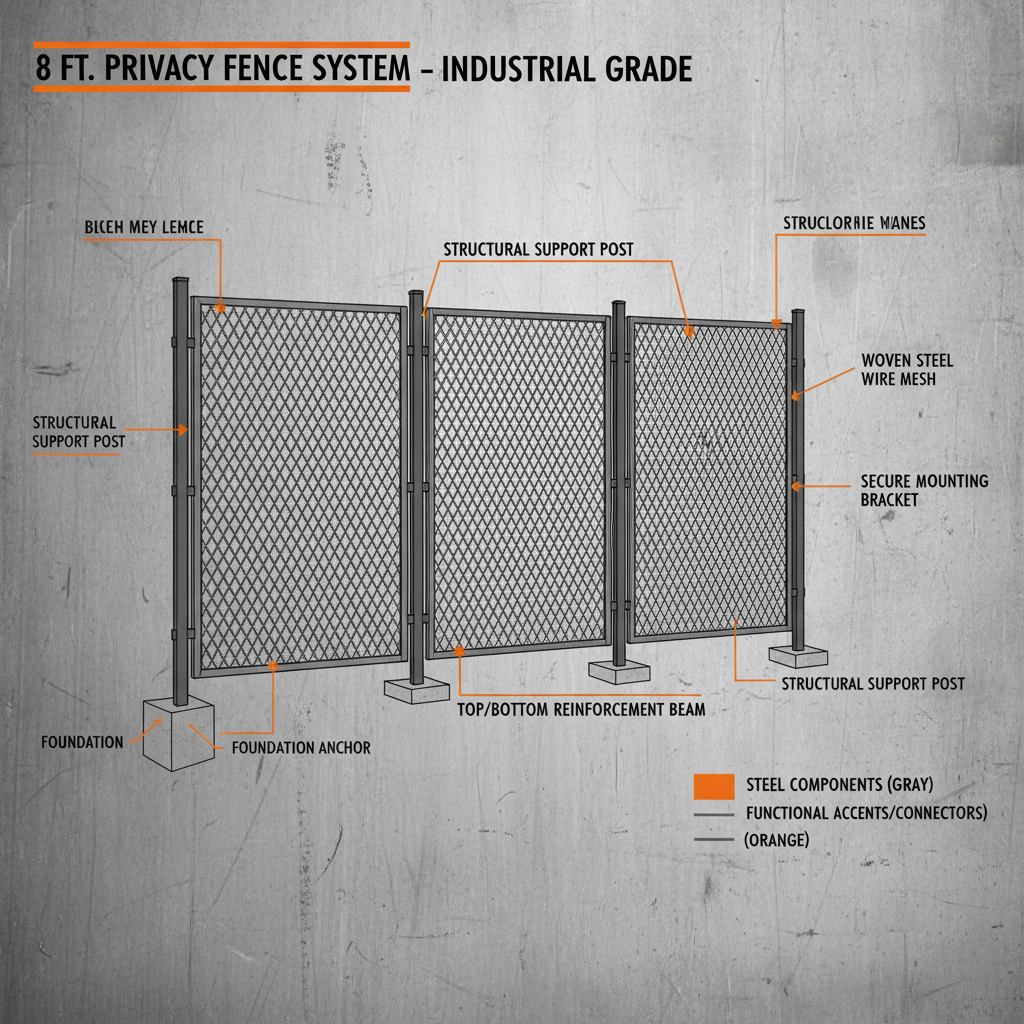
Finding an affordable perimeter solution often leads buyers to search for cheap fence boards, but the real challenge lies in balancing a low initial investment with long-term structural integrity. In the metal wire industry, "cheap" should not signify low quality, but rather efficiency in manufacturing and material selection.
The shift toward modular metal systems has redefined how residential and commercial properties approach boundary security. Instead of traditional timber boards that require constant staining and rot treatment, pre-galvanized and PVC-coated steel panels offer a cost-effective alternative that reduces the total cost of ownership over a ten-year cycle.
This analysis examines the technical logic behind economical fencing, comparing traditional board-style thinking with modern 3D panel systems to help procurement managers and homeowners make an informed decision.


When users seek cheap fence boards, they are often looking for a balance between privacy and price. However, the traditional timber board approach suffers from high labor costs and frequent replacement cycles due to weathering.
Modern metal wire manufacturing has introduced 3D panel fencing as a superior alternative. By utilizing a three-dimensional folding design, these panels achieve higher rigidity with less material, directly reducing the price per linear meter while increasing the lifespan of the installation.
The cost-effectiveness of 3D panel fencing is rooted in its modular construction. Unlike custom-built fences, these systems use standardized wire diameters (typically 4.0mm to 5.0mm) and precise hole sizes (200x50mm or 200x55mm). This standardization allows for mass production, which significantly lowers the unit cost for the end-user.
From a technical standpoint, the "3D" aspect refers to the V-shaped folds in the panel. These folds act as structural ribs, preventing the panel from bowing under pressure. This means a thinner wire can be used to achieve the same strength as a flat panel with thicker wire, reducing raw material costs without sacrificing security.
Furthermore, the ease of installation reduces one of the most expensive parts of any fencing project: labor. Because the panels are lightweight and modular, they can be quickly attached to square or round tube posts using specialized clips, minimizing the time spent on-site.
Durability is the primary driver of long-term value. A fence that is "cheap" to buy but expensive to maintain is a poor investment. To combat this, the industry utilizes a dual-layer protection system: pre-galvanized steel combined with a PVC coating.
The integration of pre-galvanization and PVC coating creates a synergistic barrier that isolates the steel from oxygen and moisture, virtually eliminating the need for repainting and reducing maintenance cycles from every 2 years to every 10-15 years.
Available in standard RAL colors such as RAL6005 (Moss Green), RAL7016 (Anthracite Grey), and RAL9005 (Jet Black), these coatings provide an aesthetic versatility that allows industrial-grade fencing to blend into residential or park environments.
When evaluating the financial viability of different fencing types, we must look beyond the purchase price. A comprehensive cost-efficiency index considers material cost, installation speed, and the frequency of required maintenance over a five-year period.
In this framework, 3D panel fencing consistently outperforms traditional wood or basic chain link options in terms of the "Value-to-Cost" ratio, particularly in environments prone to corrosion or those requiring a modern visual appeal.
For a typical residential property owner, the primary concern is often a balance between curb appeal and security. 3D panel fencing serves as an ideal solution here, providing a clean, modern line that doesn't obstruct the view as much as solid boards do, while remaining significantly more secure than simple netting.
In commercial and industrial settings—such as warehouse perimeters or public park boundaries—the priority shifts toward durability and ease of replacement. The modular nature of these panels means that if one section is damaged, it can be swapped out in minutes without dismantling the entire line, further reducing long-term operational costs.
The fencing industry is moving toward "smart" material selection, where the choice of product is driven by lifecycle analysis rather than upfront cost. We are seeing an increase in demand for hybrid systems that combine the rigidity of 3D panels with additional privacy screens or green-wall integrations.
Sustainability is also playing a larger role. Galvanized steel is highly recyclable, making it a more environmentally responsible choice than chemically treated woods. Manufacturers are now optimizing wire folding techniques to further reduce steel weight without losing structural tension.
As urban density increases, the demand for space-efficient, low-profile security solutions will grow. This will likely lead to more customizable panel heights—ranging from 630mm for garden borders to 2230mm for high-security perimeters—all while maintaining the same economical production logic.
Choosing the right system requires a clear understanding of the trade-offs between different materials. While cheap fence boards made of wood may seem attractive initially, the labor-intensive installation and maintenance often erase those savings within three years.
When selecting a metal panel system, the buyer should focus on three critical parameters: wire diameter, coating quality, and post type. A 4.0mm wire is sufficient for general boundaries, whereas 5.0mm is recommended for areas with higher impact risks.
The following framework provides a comparative overview of common economical fencing options based on professional procurement criteria.
| Material Type | Installation Cost | Maintenance Needs | Recommended Use |
|---|---|---|---|
| Pressure Treated Wood | High (Labor) | High (Staining) | Decorative Gardens |
| Galvanized Chain Link | Low | Medium (Rust) | Industrial Yards |
| 3D PVC Steel Panel | Low (Modular) | Very Low | Residential/Commercial |
| Ornamental Iron | Very High | Medium | Luxury Estates |
| PVC Coated Welded Mesh | Low | Low | Public Parks/Schools |
| High-Security Panel | Medium | Low | Critical Infrastructure |
The economy comes from three factors: mass-produced standardized components, reduced material use through structural V-folds, and significantly lower labor costs due to modular installation. Unlike wooden boards, they don't require recurring chemical treatments or painting, reducing the long-term cost of ownership.
For most residential applications where the goal is boundary definition and basic security, a 4.0mm wire diameter provides the optimal balance between cost and strength. If the fence is in a high-traffic area or requires more rigidity, upgrading to 4.5mm or 5.0mm is advisable.
PVC coating acts as a weather-resistant skin. When applied over pre-galvanized steel, it provides double protection against oxidation and corrosion. This is especially critical in coastal or high-humidity areas, extending the fence's usable life to over a decade without significant degradation.
Yes, by selecting higher specifications such as 5.0mm wire and increasing the panel height to 2030mm or 2230mm. These panels create a formidable physical barrier that is harder to climb or cut than standard chain link or wooden boards.
The main costs are the initial purchase of the panels and the accompanying accessories (posts, clips, and caps). However, because the system is modular, there is very little waste during installation, and the lack of ongoing maintenance costs usually makes it cheaper than timber in the long run.
Pre-galvanized steel is coated during the rolling process, offering a smoother finish and lower cost, ideal for PVC-coated systems. Hot-dip galvanizing involves dipping the finished product in zinc, providing thicker protection for extreme industrial environments but at a higher price point.
The search for cheap fence boards often leads to a realization that the lowest upfront price rarely equals the lowest total cost. By shifting the focus to modular, PVC-coated 3D panel systems, property owners can achieve a modern aesthetic and robust security without the burden of constant maintenance.
Ultimately, the value of a perimeter system is measured by its ability to remain functional and visually appealing over time. For those prioritizing efficiency, durability, and a professional finish, metal panel systems represent the most logical evolution in boundary management.