The selection of a professional fence panels supplier has transitioned from a simple procurement task to a strategic engineering decision. In modern industrial and residential infrastructure, the demand for modularity, corrosion resistance, and structural integrity has pushed the boundaries of traditional wire mesh fabrication, leading to a surge in high-specification welded systems.
The challenge for project managers lies in balancing initial capital expenditure with long-term lifecycle costs. Factors such as galvanization quality, UV-stabilized coatings, and wire grade directly impact the maintenance intervals and the overall security level of the perimeter. In an era of stricter urban planning and industrial safety regulations, the technical precision of the fencing system is no longer optional.
This analysis explores the critical engineering parameters and procurement frameworks necessary to evaluate a fence panels supplier, providing a technical roadmap for selecting high-performance boundary solutions tailored to diverse environmental stresses.


The mechanical integrity of a panel fence depends on the precision of the welding points and the consistency of the wire diameter. Modern systems utilize automated CNC welding to ensure that every intersection provides maximum shear resistance, reducing the risk of panel deformation under lateral pressure.
From an engineering perspective, the "3D" V-bend geometry is not merely aesthetic; it increases the moment of inertia of the panel, significantly enhancing its rigidity without requiring heavier gauge wire. This structural optimization allows for wider spans between posts while maintaining a high security rating.
The longevity of a perimeter system is determined by its metallurgical composition and the quality of its protective layers. Industry standards typically differentiate between Q195 and Q235 wire grades, with the latter offering higher tensile strength for heavy-duty applications. The internal core can be either electro-galvanized for light duty or hot-dipped galvanized for maximum corrosion protection in saline or industrial environments.
Surface treatment often involves a pre-galvanized iron wire base coupled with a PVC coating featuring UV protection. This multi-layer approach prevents the underlying steel from oxidizing while ensuring the color—typically RAL6005, RAL7016, or RAL9005—does not fade under intense solar radiation. The bonding between the PVC and the zinc layer is critical to prevent peeling, which can lead to localized corrosion.
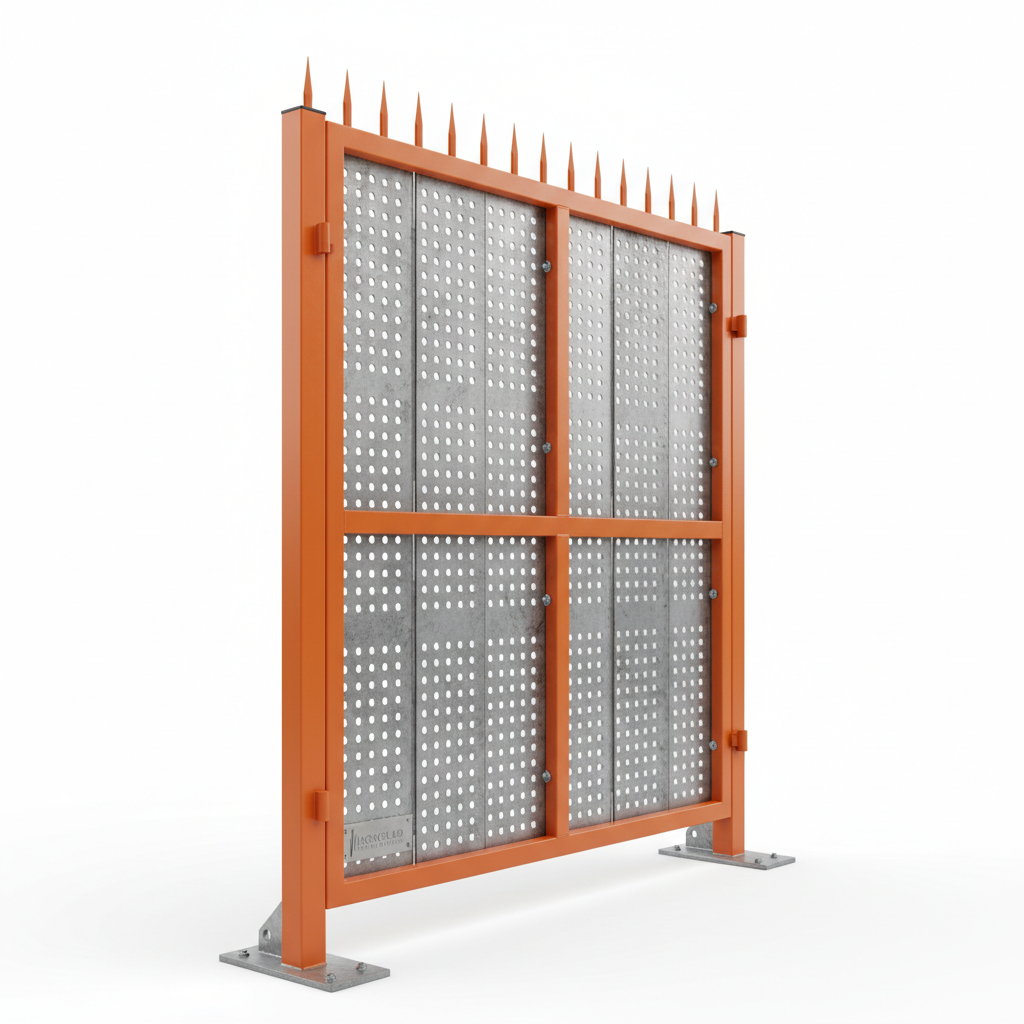
Specifications for hole sizes, such as 50x50mm or 100x100mm, are selected based on the specific security intent. Smaller apertures are essential for restricting access to small objects or animals, whereas larger meshes are used for boundary demarcation where visibility is prioritized over high-level deterrence.
Engineers must navigate a complex trade-off when specifying panel thickness and wire diameter. Increasing the wire diameter from 1.7mm to 2.5mm substantially increases the impact resistance and wind load tolerance, but it also elevates the overall weight of the installation, increasing shipping costs and requiring more robust post foundations.
Furthermore, the choice between economy, light, normal, and heavy-duty welded fences depends on the projected risk profile of the site. A heavy-duty configuration is mandatory for high-security industrial zones, whereas economy versions suffice for residential garden boundaries where the primary goal is demarcation rather than forceful intrusion prevention.
Evaluating the efficacy of different fencing configurations requires a normalized approach. By assessing factors such as corrosion resistance, installation speed, and structural rigidity, procurement teams can quantify the value of different specifications. The following assessment provides a relative engineering rating across various common configurations.
The data reflects the relative performance of standard industry configurations. High-duty systems naturally excel in rigidity and lifespan but score lower on installation speed due to their increased mass and the requirement for deeper concrete footings.
In coastal regions or chemical plants, the environmental stress on boundary systems is extreme. The combination of chloride ions and humidity can trigger rapid pitting corrosion in poorly galvanized steel. In these scenarios, the selection of hot-dipped galvanized wire with an additional UV-protected PVC layer is mandatory to ensure a service life that exceeds 15 years without structural failure.
Installation logistics also play a role in system success. Using standardized pallet packing and individual barcode labeling ensures that components—ranging from the panels to the square tube posts—are deployed in the correct sequence. This reduces on-site errors and ensures that the tension of the mesh remains uniform across the entire perimeter.
The industry is moving toward "intelligent perimeters," where physical fence panels serve as the substrate for electronic sensor integration. The trend involves incorporating fiber-optic vibration sensors or infrared beams directly into the fence structure, allowing the boundary to act as a real-time intrusion detection system rather than a passive barrier.
Sustainability is also driving material innovation. We are seeing an increase in the use of recycled steel and more eco-friendly powder coating processes that reduce Volatile Organic Compound (VOC) emissions. The goal is to maintain the high security standards of a traditional fence panels supplier while minimizing the environmental impact of the manufacturing process.
Modularization is the third major pillar of evolution. The development of "rapid-deployment" systems—where posts and panels click into place with minimal specialized tooling—is reducing installation times by up to 40%, making these systems ideal for temporary security zones or emergency infrastructure projects.
When vetting a supplier, it is critical to look beyond the unit price and evaluate the "Total Cost of Ownership" (TCO). This includes the cost of installation, the frequency of coating touch-ups, and the structural reliability of the posts and accessories. A low-cost panel that requires replacement every five years is significantly more expensive than a high-spec system with a twenty-year lifespan.
The technical alignment between the wire grade (Q195 vs Q235) and the environmental application is the primary indicator of a supplier's expertise. Professional suppliers provide a configuration matrix that maps specific wire diameters and hole sizes to the intended security level and wind-load requirements of the project site.
The following matrix provides a standardized framework for evaluating different configuration profiles based on typical engineering requirements.
| Configuration Profile | Core Specification | Durability Rating | Recommended Scenario |
|---|---|---|---|
| Basic Economy | 1.7mm Wire / Electro-Galv | Low-Medium | Residential / Garden |
| Standard Light | 2.0mm Wire / PVC Coated | Medium | Commercial Boundary |
| Industrial Normal | 2.2mm Wire / Hot-Dip Galv | High | Warehouse / Factory |
| Heavy-Duty Security | 2.5mm Wire / High-Tensile | Very High | Infrastructure / Power Plant |
| Precision Modular | Custom Mesh / UV-Stabilized | High | Urban Architecture |
| Extreme Environment | Max-Galv / Reinforced PVC | Maximum | Coastal / Chemical Sites |
Electro-galvanizing uses an electrical current to apply a thin, uniform layer of zinc, providing a smooth finish suitable for indoor or low-corrosion environments. Hot-dipped galvanizing involves immersing the wire in molten zinc, creating a much thicker, more durable layer that provides superior protection against rust and oxidation in harsh outdoor conditions. For long-term outdoor installations, hot-dipped is the engineering standard.
The V-bend increases the structural depth of the panel, which significantly raises its resistance to bending and buckling under lateral loads. This geometric reinforcement allows the panel to withstand higher impact forces and wind pressures compared to a flat 2D panel, without requiring an increase in the steel wire's diameter, thus optimizing the strength-to-weight ratio.
Common industry standards include RAL6005 (Moss Green), RAL7016 (Anthracite Grey), and RAL9005 (Jet Black). These colors are typically formulated with UV-stabilized PVC to prevent pigment degradation and chalking. Anthracite Grey (RAL7016) is increasingly popular for modern industrial sites as it blends better with concrete and steel structures while maintaining high visibility of the boundary.
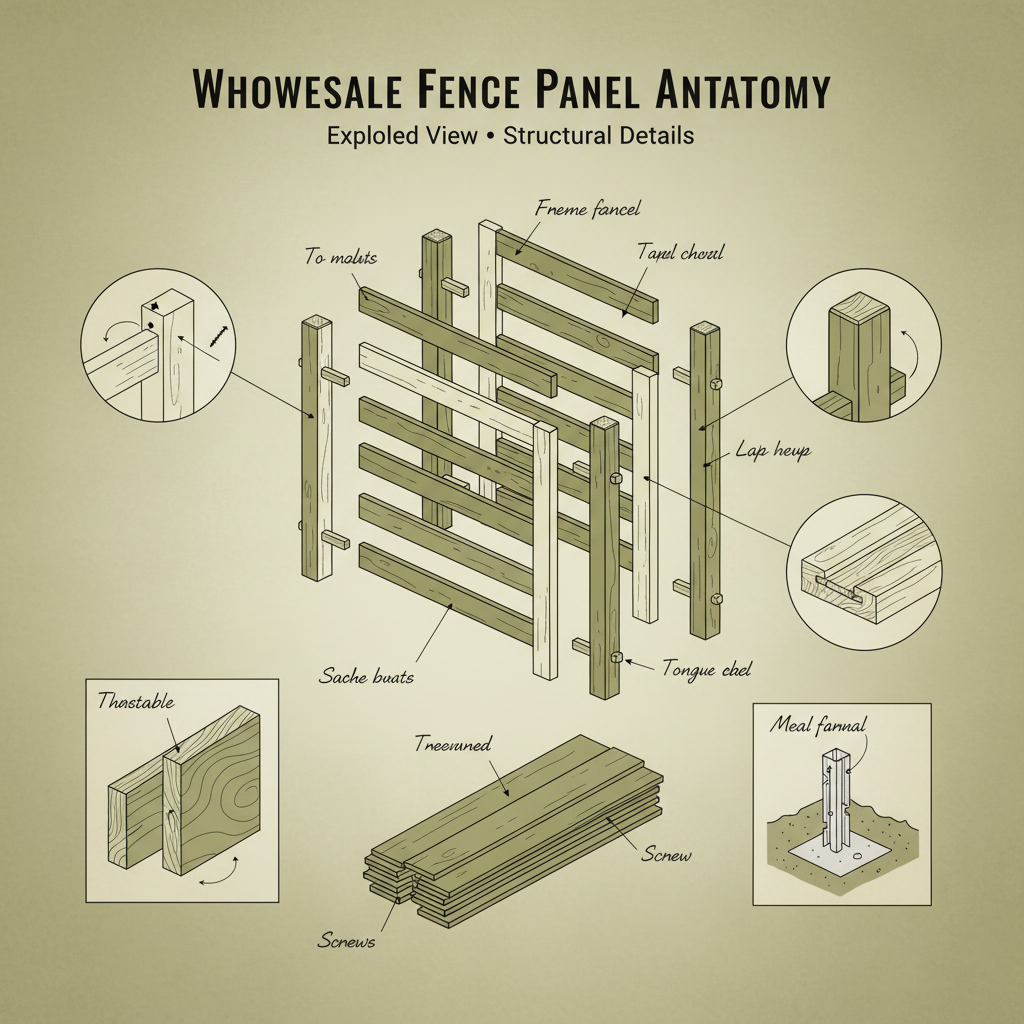
Post selection depends on the panel height and wind load of the area. Square tube posts offer higher torsional rigidity and are ideal for heavy-duty panels, while round tube posts are often used for lighter, ornamental, or garden applications. The depth of the concrete footing and the wall thickness of the post must be matched to the panel's weight to prevent leaning or structural failure over time.
Yes, provided the PVC coating is high-density and UV-protected. PVC acts as a chemical barrier that prevents corrosive agents from reaching the galvanized steel core. However, for extreme chemical environments, it is recommended to use a hot-dipped galvanized core underneath the PVC to provide a secondary line of defense should the coating be scratched or punctured during installation.
Selection is based on the "intrusion profile." 50x50mm apertures are typically used for high-security zones to prevent climbing and the insertion of tools. 100x100mm is standard for general boundary demarcation. The goal is to find a balance where the mesh is tight enough to deter intruders but open enough to allow for visibility and wind passage, reducing the wind-sail effect on the posts.
The transition from simple fencing to engineered perimeter systems highlights the importance of technical precision in material selection and structural design. By aligning wire grade, galvanization type, and panel geometry with the specific environmental stressors of a site, project managers can significantly extend the lifecycle of their infrastructure and reduce long-term maintenance overheads.
Ultimately, the value provided by a professional fence panels supplier lies in their ability to translate site-specific risks into precise technical specifications. Whether deploying high-security welded mesh or ornamental boundary panels, the integration of UV-stabilized coatings and high-tensile steel remains the benchmark for durable, secure, and cost-effective perimeter management.