
-
Email:zhao@hyliec.cn
-
Tel:+86 311 85273988
-
WhatsAPP:8613931128750
Single Panel Fence—Quick Install, Durable, Secure: Why Now?
Single Panel Fence: a practical, good‑looking classic that still makes sense in 2025
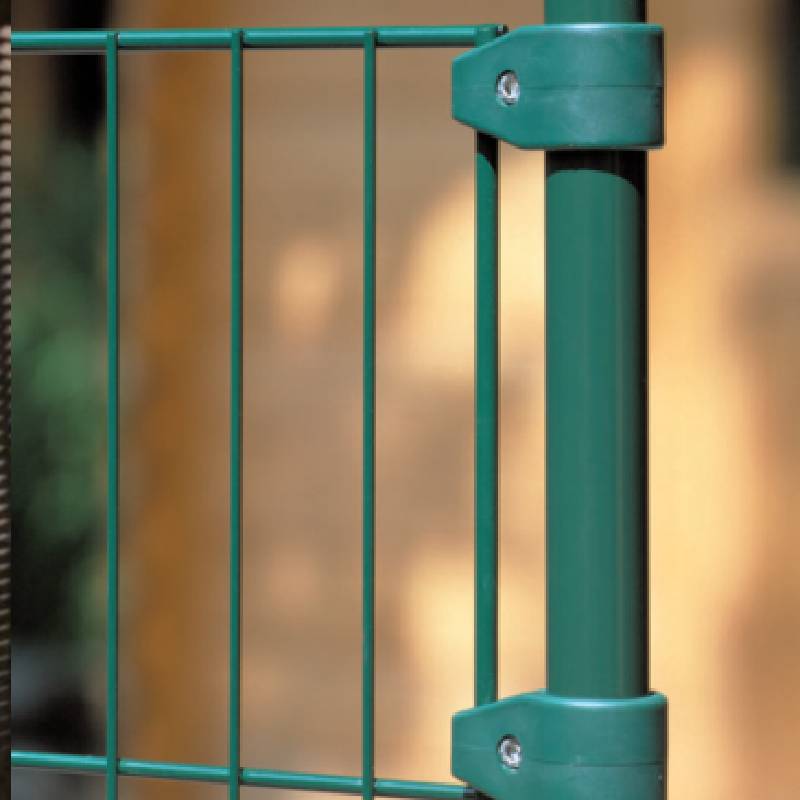
If you’ve been around site design or facilities long enough, you’ve seen a single panel fence guarding parks, schools, office campuses—the whole lot. Originating from Europe but produced at scale in China, it’s the “just works” option. To be honest, that’s why specifiers keep coming back: clean lines, quick installs, predictable budgets.
Where the market is heading
Three trends I keep hearing from buyers: 1) more color choice (RAL 6005 still rules, but anthracite RAL 7016 is catching up), 2) faster lead times with pre‑galvanized wire + powder, and 3) published test data, not just “trust us.” There’s also a quiet shift to recycled steel content and transparent EPDs—surprisingly, facility managers now ask about that at pre‑bid.
Typical specifications (field‑proven)
| Mesh aperture | 50 × 200 mm (≈ 2 × 8 in) |
| Wire diameter | 4.0 / 4.5 / 5.0 mm single wire (low‑carbon Q195/Q235) |
| Panel size | H: 1030–2430 mm; W: 2500 or 3000 mm; pressed V‑beams for rigidity |
| Posts | 60×60×2.0 mm (or 70×70 mm), bolt‑down or in‑ground with caps and brackets |
| Finish options | Pre‑galv wire to EN 10244‑2 + polyester powder 60–80 μm; or hot‑dip galvanizing to ISO 1461 |
| Corrosion class target | ISO 12944 C3 standard; C4 with higher zinc + thicker powder (real‑world use may vary) |
Many customers say a single panel fence punches above its weight: good airflow, tidy lines, friendly price. It’s not a prison fence—nor should it try to be—but for campuses and parks, it’s the Goldilocks pick.
How it’s made (quick but rigorous)
- Materials: low‑carbon steel wire (Q195/Q235), zinc per EN 10244‑2; posts from structural steel.
- Welding: resistance‑welded mesh, then V‑pressing for stiffness; planar tolerance checked.
- Surface prep: degrease, rinse, phosphating; powder coating 60–80 μm (RAL palette).
- Alternative: hot‑dip galvanizing to ISO 1461 for coastal or industrial sites.
- Testing: weld shear to EN 10223 methods; coating adhesion ISO 2409 (GT0–GT1 typical); salt spray ASTM B117 ≥ 500–1000 h (depending on system); dimensional and visual QA.
Service life: around 10–20 years in C3 environments; 5–8 years in harsher C4 without upgrades; up to 15+ with heavier zinc and powder. Actually, site maintenance matters more than most spec sheets admit.
Applications and feedback
Residential boundaries, office areas, logistics yards, schools, sports courts, and parks. Facility teams like that a single panel fence accepts razor/flat wrap upgrades or privacy slats later, if needed. A park client told me, “It just disappears into the landscape,” which, funnily enough, was the brief.
Vendor snapshot (indicative, ≈ values)
| Vendor | Coating system | Wire dia. | Salt spray | Lead time | Certs |
|---|---|---|---|---|---|
| HYLIEC Fence (China) | Pre‑galv + 70 μm powder | 4.0–5.0 mm | ≈ 720 h (ASTM B117) | 15–25 days | ISO 9001/14001; REACH/RoHS powder |
| Vendor X (EU) | HDG to ISO 1461 + powder | 5.0 mm | ≈ 1000 h | 4–6 weeks | ISO 12944 C4 system |
| Vendor Y (Budget) | Pre‑galv + 50 μm powder | 4.0 mm | ≈ 480 h | 3–5 weeks | Basic factory QA |
Note: figures are indicative; verify current datasheets and project specs.
Customization checklist
Heights 1.0–2.4 m; 2500 or 3000 mm widths; 4.0/4.5/5.0 mm wire; RAL 6005/7016/9005; clamp types; sloped panels; anti‑climb top; gates to match. A single panel fence is more configurable than it looks at first glance.
Mini case: city park upgrade
A municipal park (Central Europe) swapped chain‑link for 1.8 m panels, 5.0 mm wire, RAL 7016. 1,200 m installed in 9 days with bolt‑down posts. Post‑install survey? 92% of visitors rated the look “better” or “much better,” and maintenance logged zero rust spots at 18‑month check. Not bad.
Standards and proof
- EN 10244‑2 zinc coatings on steel wire
- ISO 1461 hot‑dip galvanizing; ISO 12944 corrosion categories
- ASTM B117 neutral salt spray; ISO 2409 cross‑cut adhesion
Citations:
- EN 10244‑2: Steel wire and wire products — Zinc or zinc alloy coatings on steel wire.
- ISO 1461: Hot dip galvanized coatings on fabricated iron and steel articles.
- ISO 12944: Paints and varnishes — Corrosion protection of steel structures by protective paint systems.
- ASTM B117: Standard Practice for Operating Salt Spray (Fog) Apparatus.
- ISO 2409: Paints and varnishes — Cross‑cut test.
-
Professional Guide to fix leaning fence post and Stabilize Fences
NewsApr.16,2026
-
Professional Guide for Effective Leaning Fence Post Repair
NewsApr.09,2026
-
Comprehensive Guide to Effectively Fix Fence Post and Ensure Stability
NewsApr.07,2026
-
Comprehensive Guide to Effective and Lasting Fence Post Repair Solutions
NewsApr.04,2026
-
A Comprehensive Guide to Successfully Installing Fence Posts for Longevity
NewsMar.31,2026
-
Comprehensive Guide to Effective and Lasting Repairing Fence Post Solutions
NewsMar.28,2026